Surgery preparation: Preparing for surgery: How to adapt the bathroom for a safer recovery after surgery?

Recovery after surgery, especially knee or hip surgery, requires a safe and adapted environment to facilitate the process and prevent complications. The bathroom, a space used daily, often presents significant challenges due to slippery surfaces, limited space, and the need for movements that can be painful or difficult after an operation. Adapting this space is a fundamental part of surgical preparation , as it reduces the risk of falls and allows patients to maintain independence in personal hygiene activities.
Fall prevention is crucial to avoid injuries that could compromise your recovery. With joint pain, muscle weakness, or temporary mobility limitations, everyday actions like sitting on the toilet or stepping into the shower can become risky. Therefore, planning and making adjustments to your bathroom before surgery not only provides peace of mind but also ensures a safer and more comfortable return home. This article will guide you through the essential adaptations needed to transform your bathroom into a functional and safe space during your convalescence.
Key points
Fall prevention: Install non-slip mats and remove obstacles for a safe floor.
Toilet support: Consider raised seats and grab bars for ease of use.
Safe shower and bath: Use seats or benches and grab bars for safe hygiene.
Advance planning: Make the necessary adjustments well in advance of surgery.
The Importance of Bathroom Safety: A Key Part of Surgery Preparation
Recovery after surgery, especially those involving joints like the knee or hip, requires a home environment that prioritizes safety and independence. The bathroom, an essential space for personal hygiene, often presents unique challenges due to its slippery surfaces and the need to perform movements that can be difficult or painful after an operation. Therefore, adapting this space is a critical component of pre-surgical preparation , designed to minimize the risk of falls and facilitate a safer and more comfortable recovery.
Preventing falls is crucial to avoiding complications that could delay your healing process. After surgery, it's common to experience pain, muscle weakness, or temporary limitations in mobility. These conditions significantly increase the risk of slips or trips when using the toilet, shower, or bathtub. Advance planning and implementing simple bathroom modifications can make a big difference, allowing you to maintain your independence and dignity during your recovery.
Fall prevention: Essential measures
To create a safe bathroom, it's crucial to focus on fall prevention. Adaptations should provide support and stability, especially in areas where the risk is higher. One of the first steps is to ensure the floor is not a hazard. Placing non-slip mats inside the shower or bathtub and on the bathroom floor is an effective way to prevent slips. In addition, it's vital to keep the floor dry and free of obstacles. Any loose rugs or items that could block access should be removed to prevent unexpected trips and falls.
Another key aspect is the installation of grab bars. These must be securely fixed to the wall, either vertically or horizontally, and never diagonally. It's important to remember that towel rails are not designed to support body weight and should not be used as a substitute for grab bars. Strategically placing these bars, especially near the toilet and inside the shower, provides firm support for sitting, standing, and moving around with confidence.
Adapting your bathroom before surgery is an investment in your safety and well-being. Small changes, such as non-slip mats and grab bars, dramatically reduce the risk of falls, allowing for a more peaceful and independent recovery in your own home.
Preparing your home, and specifically the bathroom, before surgery is a key recommendation. This ensures that upon returning home, your environment is already set up to meet your needs, facilitating a smooth transition and a stress-free recovery. These adaptations not only protect against accidents but also foster the patient's independence and confidence throughout their rehabilitation process.
Toilet Adaptations: Facilitating Use Post-Surgery
After surgery, especially if it involves the hips or knees, the simple act of using the toilet can become a significant challenge. Bending over, sitting down, and standing up can be painful, difficult, or even risky due to limited mobility or muscle weakness. Adapting the toilet area is therefore crucial to ensuring your safety, comfort, and independence during recovery. These modifications aim to reduce strain on your joints and muscles, minimizing the risk of falls and allowing you to manage personal hygiene more easily.
Booster seats and safety frames
One of the most effective toilet adaptations is the use of a raised toilet seat . This device increases the seat height, reducing the distance you need to travel when sitting down and standing up. This is particularly helpful if you have difficulty bending over or if hip or knee flexion is limited or painful. Raised toilet seats can be fixed or portable and are easily installed over your existing toilet.
In addition, a toilet safety frame can provide extra support. This frame fits around the toilet and offers two sturdy handles for support when sitting down and standing up. Combining a raised toilet seat with a safety frame creates a robust support system that makes using the toilet considerably easier, promoting independence and reducing physical effort.
Strategic grab bars
Grab bars are essential for bathroom safety, and their strategic placement near the toilet is crucial. These bars provide a firm and secure support point to help you sit down and stand up with confidence. It is crucial that the grab bars are securely fixed to the wall, either vertically or horizontally, depending on your needs and the bathroom layout.
It's important to remember that towel rails are not designed to support a person's body weight and should never be used as grab bars. A towel rail could easily detach, causing a fall and potential injury. Ensure that any grab bar installed is specifically designed for support and is properly anchored to guarantee maximum safety.
Other aids for personal hygiene
A portable bidet : This device allows for hands-free cleaning by spraying warm water and air for drying. It's an excellent option for maintaining intimate hygiene without uncomfortable or painful movements.
A commode chair : In some cases, especially if access to the bathroom is difficult or mobility is very limited, a commode chair can be a temporary alternative to the toilet. These chairs are portable and can be placed near the bed, offering a practical solution for basic needs.
These adaptations, along with careful planning, contribute significantly to a more comfortable and safe recovery in your own home.
Safe Shower and Bathtub: Essential Elements for Your Recovery
Showering or bathing are crucial for personal hygiene, but after surgery, they can become a source of anxiety or risk. Weakness, pain, or limited mobility can make getting in and out of the shower or bath, or even standing while bathing, a challenge. Adapting this area of the bathroom is essential to ensure your safety and allow you to maintain your independence without fear of falls or injury. Effective pre-surgery preparation includes making this space as safe and accessible as possible.
Shower seats and benches: Comfort and stability
One of the most important adaptations for your shower or bathtub is the addition of a shower seat or bench . Using a shower seat or bench allows you to bathe while seated, significantly reducing physical exertion and the risk of falls. Sitting minimizes the need to maintain balance on wet and slippery surfaces, which is especially beneficial if you experience dizziness, fatigue, or have weight restrictions on one leg. These seats are designed to be stable and secure in wet environments, providing firm support throughout the entire bathing process.
Slip prevention: Dry mats and floors
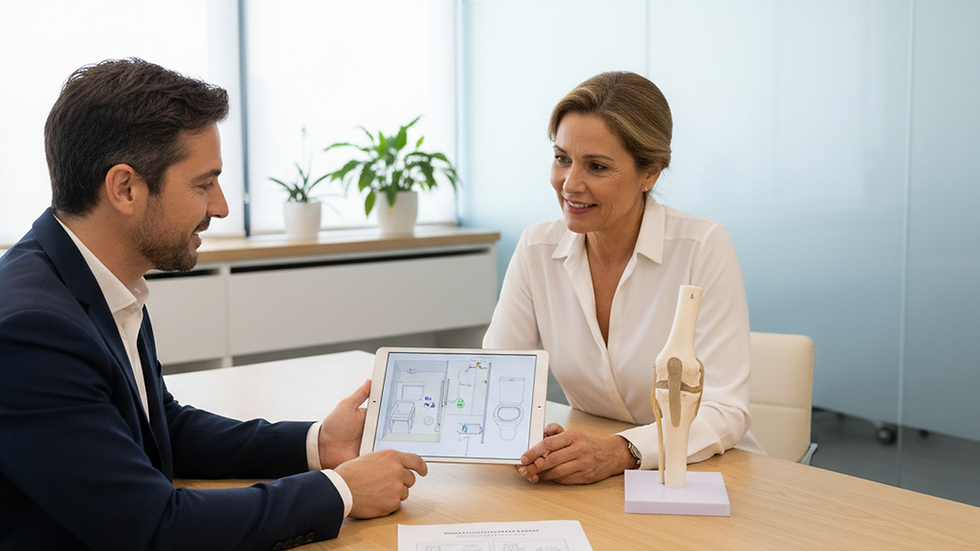
Slip prevention is paramount in the shower and bathtub. Placing non-slip mats inside the shower or tub is a simple yet highly effective way to prevent falls. These mats provide extra traction on surfaces that are naturally slippery when wet. Additionally, it's crucial to keep the bathroom floor as dry as possible. Keep towels handy to mop up any splashes immediately, and consider using non-slip bath mats outside the shower or tub for secure footing when getting out.
For a safe shower or bath after surgery, prioritize stability. A shower seat, non-slip mats, and properly installed grab bars are essential to prevent falls and allow you to maintain your personal hygiene with confidence and independence.
Support bars and temperature control
Grab bars are essential in the shower or bathtub area. They should be securely installed on the walls in strategic positions that allow you to hold on when entering, exiting, and moving around the space. It is vital that these bars are properly fixed and can easily support your weight. As with grab bars near the toilet, never use towel racks for this purpose, as they are not designed to bear weight and could give way, causing a fall.
Another important aspect is water temperature control. Setting the water heater temperature to no more than 49°C (120°F) can prevent accidental scalding, especially if your skin sensitivity is altered or your reaction time is slower due to medication or recovery. A shower thermostat can also be helpful for maintaining a constant temperature and avoiding sudden changes that could upset your balance.
Grab Bars and Other Assistive Devices: Firm Support Where You Need It
Grab bars are essential for adapting a bathroom for safe recovery after surgery. Their main function is to provide firm and stable support , allowing you to perform key movements such as sitting, standing, and moving around with greater safety and confidence. They are especially important in areas where the risk of falls is high, such as near the toilet and inside the shower or bathtub.
Correct installation of the grab bars
The effectiveness of a grab bar depends on its correct installation. It is crucial that these bars are securely attached to the wall , ensuring they can support your body weight without sagging. They can be installed vertically or horizontally, depending on the specific need and the layout of the space. For example, a vertical bar can be helpful for standing up, while a horizontal one can provide support when sitting or moving laterally. It is essential to avoid diagonal installation, as this can reduce stability and grip strength.
A common and dangerous mistake is using towel rails as a substitute for grab bars. Towel rails are not designed to support weight and can easily detach, causing a fall and potential injury. Always ensure that any grab bar installed is an assistive device specifically designed for this purpose and that it has been properly anchored to the wall structure.
Other bathing assistance devices
Raised toilet seats and safety frames: As mentioned earlier, these devices increase the height of the toilet and provide grab handles, making it easier to sit down and stand up without straining your joints. They are essential if you have difficulty bending or flexing your hips and knees.
Portable bidet: For maintaining proper personal hygiene without awkward movements, a portable bidet is an excellent option. It allows for cleaning with warm water and air drying, reducing the need for manual manipulation and effort.
Commode chair: In situations where access to the toilet is particularly difficult or mobility is very limited, a commode chair can be a practical and temporary alternative. These chairs are portable and can be strategically placed to minimize movement.
Combining grab bars with these other devices creates a fully safe and functional bathroom environment. Pre-surgical preparation should include a detailed assessment of your individual needs to select the most suitable devices, thus ensuring a more comfortable and safe recovery at home.
Advance Planning and Final Review: Complete Your Surgery Preparation
The key to a successful and safe recovery at home after surgery lies in advance planning . Don't wait until the last minute to adapt your bathroom; it's advisable to prepare your home and bathroom well in advance of surgery. This foresight will allow you to return to an environment already optimized for your needs, facilitating a calmer and less stressful recovery. Early preparation not only ensures the availability of necessary equipment but also gives you time to familiarize yourself with it and make any final adjustments.
Benefits of early preparation
Making bathroom adaptations before surgery offers several advantages. First, it reduces anxiety and worry about how you will manage personal hygiene tasks upon returning home. Knowing your bathroom is safe and accessible will allow you to fully concentrate on your physical recovery. Second, it avoids the need for last-minute changes, which can be rushed or incomplete. A well-prepared bathroom minimizes the risk of falls and other complications that could delay your rehabilitation.
In addition, advance preparation gives you the opportunity to try out and adjust devices. For example, you can check the ideal height for a raised toilet seat or the most comfortable placement for grab bars. This trial-and-error process is much easier to do before surgery, when your mobility isn't compromised. Also, consider how you'll move around the bathroom with aids like crutches or a walker and make sure there's enough room to maneuver.
Anticipating and adapting the bathroom before surgery is essential. This early planning ensures a safe return home, reduces postoperative stress, and allows for a focused recovery, minimizing risks and facilitating independence in personal hygiene.
Professional consultation and final review
For comprehensive surgery preparation , don't hesitate to consult with professionals. Your medical team, physical therapists, or occupational therapists can offer specific recommendations based on your type of surgery and individual needs. They can guide you on the most suitable devices and the best way to install them to ensure maximum safety and functionality. A commode chair, for example, can be a temporary alternative to the toilet in cases of very limited mobility, and a professional can help you determine if it's the right option for you.
Finally, conduct a thorough check of all adaptations before your surgery. Verify that grab bars are securely anchored, anti-slip mats are properly positioned, and there are no obstacles on the floor. Ensure that everything is within easy reach and easily accessible. This final check will give you peace of mind knowing that you have done everything possible to ensure a safe and supportive environment for your recovery.
Conclusion
Adapting your bathroom is a crucial and proactive step in preparing for surgery , especially for knee or hip procedures. By implementing simple yet effective changes, such as installing grab bars, raised toilet seats, and non-slip mats, you create a safe environment that minimizes the risk of falls and promotes independence during recovery. This advance planning not only protects your physical well-being but also reduces stress and anxiety, allowing you to fully focus on your rehabilitation. A safe bathroom means a more peaceful and successful recovery in the comfort of your own home.
Frequently Asked Questions
When should I start adapting my bathroom? It is recommended to make all the necessary adaptations well in advance of the surgery, ideally several weeks before, to ensure that everything is ready when you return home.
Do I need professional help for adaptations? To ensure the safety and correct installation of devices such as grab bars, it is advisable to consult with your medical team, physiotherapists, or occupational therapists.
What's most important to prevent falls in the bathroom? Key measures include using non-slip mats, keeping the floor dry, installing firmly anchored grab bars, and considering a raised toilet seat.
Important medical notice
The information provided in this article is for educational purposes and should not be considered a substitute for professional medical advice. Recommendations regarding home modifications and preparation for surgery should be personalized and discussed with your doctor or healthcare team, who can assess your individual situation and offer the most appropriate guidance for your recovery.


