How much exercise can I do before a knee replacement?

Undergoing knee replacement surgery is a significant decision that can dramatically improve quality of life by alleviating chronic pain and restoring mobility. However, preparation for this surgery doesn't begin on the day of the procedure. In fact, preoperative exercise plays a crucial role in a successful recovery and in optimizing long-term results. Strengthening your body before surgery can contribute to a faster and more effective recovery, reduce pain, and improve mobility after the procedure. This proactive approach, often called "prehabilitation," prepares your body for the stress of surgery and lays the foundation for a smoother rehabilitation.
Scientific evidence suggests that progressive resistance training before surgery can significantly improve functional performance, knee extensor muscle strength, and overall outcomes reported by patients undergoing total knee replacement. By strengthening key muscles around the knee, such as the quadriceps, hamstrings, and glutes, and maintaining joint flexibility, a solid foundation is established for successful rehabilitation and a faster return to daily activities.
Key points
Preoperative exercise accelerates recovery and helps reduce postoperative pain.
"Prehabilitation" improves muscle strength and joint mobility before surgery.
Strengthening key knee muscles optimizes long-term functional results.
A better-prepared body facilitates a more effective and less complex rehabilitation.
The Importance of Exercise Before Knee Replacement
Properly preparing for knee replacement surgery is a crucial step that can directly influence the success of recovery and long-term outcomes. Far from being a passive phase, the pre-surgery period offers a valuable opportunity to strengthen the body and optimize physical fitness. This proactive approach, known as prehabilitation, has proven crucial for a smoother transition to post-operative rehabilitation.
Clinical evidence suggests that strengthening the body before surgery can significantly contribute to a faster and more effective recovery. This includes reduced postoperative pain and a substantial improvement in knee mobility. By starting a supervised exercise program before surgery, patients can improve their overall fitness, leading to a better response to the procedure and subsequent physical therapy.
Key benefits of prehabilitation
Prehabilitation focuses on preparing the joint and surrounding muscles for the stress of surgery. Specific exercises help strengthen essential muscles around the knee, such as the quadriceps , hamstrings , and glutes . Maintaining joint flexibility is also a primary goal. This muscular and joint preparation not only improves strength and mobility before surgery but also establishes a solid foundation for more effective rehabilitation.
Prehabilitation before knee replacement is a proactive strategy that strengthens key muscles and improves flexibility. This approach prepares the body for surgery, accelerating recovery, reducing pain, and optimizing postoperative mobility, leading to better long-term functional outcomes.
Studies have indicated that prehabilitation, which often involves progressive resistance training, can improve postoperative outcomes. This manifests as better functional performance, increased knee extensor strength, and more favorable results reported by patients themselves. Essentially, a better-prepared body is one that recovers more effectively and with fewer complications, allowing for a faster return to daily activities.
Safe and Recommended Exercises to Strengthen the Knee
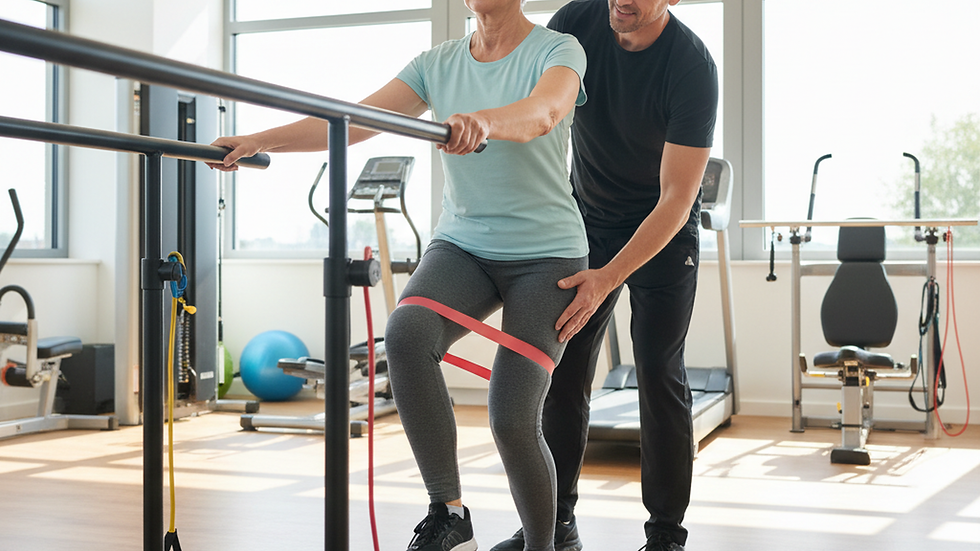
Before knee replacement surgery , it's essential to select exercises that strengthen supporting muscles and improve flexibility without aggravating existing pain or condition. The goal is to prepare your body for surgery and facilitate a faster recovery. It's crucial that any exercise program be supervised or approved by your doctor or a physical therapist, who can tailor the routines to your individual needs and limitations.
Preoperative exercises focus on three main areas: muscle strengthening, flexibility improvement, and low-impact cardiovascular conditioning. By strengthening key muscles around the knee, such as the quadriceps, hamstrings, and glutes, stability is improved and stress on the joint is reduced.
Strengthening exercises
Straight leg raises: Lying on your back, raise one straight leg a few inches off the ground, hold for a few seconds, and lower slowly. This strengthens the quadriceps.
Quadriceps contractions: Sitting or lying down, press the back of your knee against the floor or a rolled-up towel, contracting your thigh muscle. Hold and relax.
Bridges (hip raises): Lying on your back with your knees bent and feet flat on the floor, lift your hips off the ground until your body forms a straight line from your shoulders to your knees. This strengthens your glutes and hamstrings.
Standing hamstring curls: Standing, holding onto a support, bend one knee bringing the heel towards the buttocks.
Heel raises: Standing, rise up onto your toes to strengthen your calves.
Flexibility exercises
Maintaining flexibility is vital for range of motion. Gentle stretching can help:
Hamstring stretch: Sitting with one leg extended, try to reach your toes.
Quadriceps stretch: Standing, hold your ankle and gently pull your heel towards your buttocks.
Low-impact cardiovascular activity
To improve endurance without overloading your knee, consider activities such as:
Walking: On flat, smooth surfaces, with appropriate footwear.
Stationary bike cycling: Adjust the resistance for comfort and avoid excessive strain.
Swimming or aquagym: Water reduces the impact on the joints, allowing for freer and less painful movement.
Always remember to listen to your body. If an exercise causes sharp or persistent pain, you should stop and consult your doctor. Progression should be gradual, increasing intensity or duration only when you feel comfortable and pain-free.
Exercises to Avoid and Warning Signs During Preparation
As you prepare for a knee replacement , it's just as important to know which exercises to avoid as it is to know which ones to do. Certain activities can aggravate your condition, increase pain, or even cause new injuries, which could delay or complicate your surgery. The main goal is to protect your knee joint and avoid any unnecessary stress that could worsen existing damage or inflammation.
It is essential to maintain open communication with your doctor or physical therapist. They are best equipped to guide you regarding the specific limitations of your knee and which movements are safe or dangerous in your particular case. Listening to your body is the golden rule: if an exercise causes sharp, persistent, or unusual pain, you should stop it immediately.
High-risk activities to avoid
To protect your knee before surgery, it's advisable to avoid any activity involving significant impact or sudden movements. This includes high-impact sports such as running, jumping, basketball, soccer, or tennis. These activities can put excessive pressure on the already compromised joint, accelerating cartilage wear and increasing pain.
You should also avoid exercises that require deep knee flexion or twisting movements. Examples include deep squats, extreme lunges, or any movement that involves rotating the knee while the foot is planted on the ground. These movements can strain the internal structures of the knee and worsen symptoms.
Warning signs that require medical attention
During your pre-operative exercise program, it's crucial to be aware of certain signs that indicate something is wrong and that you should seek medical advice. Don't ignore these symptoms, as they could be indicative of a problem that needs to be evaluated:
Increased pain: A sharp, stabbing pain or a significant increase in usual pain that does not improve with rest.
Swelling: A noticeable increase in swelling around the knee.
Redness or warmth: The skin around the knee feels warm to the touch or has an unusual redness.
Unusual sounds or sensations: Cracking, popping, or the sensation of the knee suddenly "locking" or "giving way".
Instability: Feeling that the knee is unable to support its weight or that it is going to bend.
Difficulty moving the knee: A new or worsening limitation in range of motion.
To protect your knee before surgery, avoid high-impact activities and deep twisting or bending movements. Watch for warning signs such as sharp pain, swelling, or instability, and always consult your doctor if you experience any concerning symptoms.
If you experience any of these warning signs, it's important to contact your doctor or physical therapist immediately. They can assess the situation, adjust your exercise plan, or recommend appropriate treatment to prevent complications before your knee replacement . Safety and optimal preparation are key to your successful recovery.
How to Personalize Your Pre-Operative Exercise Plan
Preparing for knee replacement is a personal journey, and your pre-operative exercise plan should reflect that individuality. There is no one-size-fits-all program, as each person has a different fitness level, varying degrees of pain, and specific limitations. The key to a successful plan is personalization, designed to maximize benefits while minimizing risks.
Collaboration with healthcare professionals is essential in this process. Your doctor and a physical therapist are your most important allies. They will assess your current condition, including your muscle strength, range of motion, pain level, and any other pre-existing medical conditions. Based on this comprehensive evaluation, they will be able to design an exercise program tailored to your specific needs and abilities.
Adapting to their limitations and pain level
A personalized plan means the exercises will be tailored to how you feel each day. If an exercise causes pain, it's crucial to tell your physical therapist so they can modify it or suggest an alternative. The goal is to strengthen your knee and surrounding muscles without aggravating your condition. This might involve:
Modify the intensity: Reduce the weight or resistance.
Adjust the range of motion: Do not force the knee beyond a comfortable point.
Change the duration: Perform fewer repetitions or sets.
Choose low-impact exercises: Prioritize activities like swimming or stationary cycling if walking is painful.
Gradual progression is another pillar of a personalized plan. It's not about achieving overnight results, but about building strength and endurance steadily and safely. Your physical therapist will guide you in increasing the difficulty of the exercises as your body gets stronger and your pain decreases. This methodical approach helps prepare your body optimally for surgery and subsequent recovery.
Remember that pre-operative exercise is not only about physical strengthening, but also about preparing you mentally for the procedure. A well-prepared body recovers more efficiently, leading to a smoother post-operative rehabilitation and more satisfying long-term results. Listen to your body and trust the guidance of your healthcare professionals to ensure the best path to your knee replacement .
Long-Term Benefits and Preparation for Knee Replacement Recovery
Dedicating time to exercise before a knee replacement not only facilitates the immediate surgical procedure but also lays the foundation for a smoother postoperative recovery and lasting results. Pre-operative physical preparation is an investment in your future health, directly impacting the speed and quality of your rehabilitation, as well as your long-term quality of life.
Strengthening the body before surgery, an evidence-based concept, contributes to a faster and more effective recovery. This translates into a shorter hospital stay, reduced postoperative pain, and a significant improvement in knee mobility. A well-conditioned body is more resilient and better able to cope with the stress of surgery and the rehabilitation process.
More efficient postoperative recovery
Prehabilitation, which includes progressive resistance training, has been shown to improve postoperative outcomes. Patients who prepare physically before surgery often experience faster rehabilitation. This is because they already possess a base of muscle strength and range of motion that allows them to begin postoperative physical therapy from a more advanced stage. The ability of the key muscles around the knee (quadriceps, hamstrings, glutes) to respond to training is crucial for restoring joint function.
Preoperative exercise for knee replacement is a crucial investment. It prepares the body for surgery, accelerates rehabilitation, and improves long-term strength and mobility. This proactive preparation optimizes functional outcomes and significantly contributes to a better quality of life in the future.
Improvement of long-term quality of life
The benefits of preoperative exercise extend far beyond the first few weeks after surgery. Improved knee extensor strength and optimized functional performance are associated with more positive long-term patient-reported outcomes. This means you'll be able to return to your daily activities, hobbies, and sports more easily and with fewer limitations. The ability to move pain-free and with confidence is a key factor in quality of life.
In short, active preparation before a knee replacement is not just a recommendation, but a comprehensive strategy for maximizing the surgery's success. By investing time and effort in strengthening your body and improving your mobility before the procedure, you'll be laying the foundation for a successful recovery and a fulfilling, active life for years to come.
Active preparation before knee replacement is key to surgical success and optimal recovery. Preoperative exercise strengthens the body, improves mobility, and lays the foundation for efficient rehabilitation and a better quality of life in the long term. This proactive, professionally guided approach allows you to face the procedure with greater confidence, reducing recovery time and facilitating a faster return to daily activities. Your plan should be personalized and medically supervised. Your commitment to prehabilitation is a crucial step toward a more active and pain-free life.
Frequently Asked Questions
When should you start pre-operative exercise? As soon as your doctor gives you the go-ahead, ideally several weeks or months before surgery.
What should you do if exercise causes pain? Stop exercising and consult your doctor or physical therapist to adjust your plan.
Is it possible to exercise with knee pain? Yes, under professional supervision, with low-impact exercises adapted to your pain level.
Important medical notice
This article is for informational and educational purposes only. It is not a substitute for professional medical advice, diagnosis, or treatment. The information here does not replace your relationship with your doctor. Decisions about your health should always be made in consultation with a qualified healthcare professional. Do not disregard medical advice or delay seeking treatment because of what you read here.


