Recovery after surgery: Guide to sitting and standing: key to your recovery after joint surgery

Undergoing joint replacement surgery, whether of the knee or hip, is a significant step toward improving quality of life and mobility. However, the long-term success of this procedure depends largely on proper post-operative recovery , which includes learning to perform everyday tasks such as sitting down and standing up from a chair safely. These movements, which once seemed automatic, now require conscious technique to protect the new joint, prevent complications, and facilitate effective rehabilitation. Adopting the correct postures not only minimizes the risk of dislocations or damage but also helps reduce pain and regain independence more quickly. This article will guide you through the essential recommendations for sitting down and standing up from a chair safely and effectively, ensuring optimal post-operative recovery .
Key points
The correct technique when sitting and standing is essential to protect your new joint.
Learning these movements helps prevent complications and speeds up rehabilitation.
Preparing the environment and using supports are crucial for your safety.
The precautions vary slightly depending on whether your surgery was on your knee or hip.
Consistency and patience are key throughout the entire recovery process.
The Importance of Proper Recovery After Surgery in Movement
The ability to sit down and stand up safely from a chair is a fundamental pillar of your recovery after joint replacement surgery . This process, which we often take for granted, becomes both a challenge and an opportunity to protect your new joint. Performing these movements correctly not only prevents potential complications such as hip prosthesis dislocation or excessive stress on the knee, but also promotes faster and more effective rehabilitation. Adopting the proper techniques from the start will allow you to regain your independence with confidence and minimize pain.
A crucial part of this initial phase is preparation. Before attempting to sit or stand, it's vital to ensure your environment is set up for your safety. This includes choosing the right chairs. It's recommended to avoid soft chairs, rocking chairs, stools, sofas, and chairs that are too low , especially after knee or hip surgery, as these can restrict movement and increase the risk of falls or strain on the joint. Look for firm chairs with stable armrests and a height that allows your knees to be roughly at hip level or slightly lower when seated.
General principles for safe movement
Regardless of whether you had knee or hip surgery, there are basic principles that will guide your movements. You should always keep your feet and knees pointing straight ahead, avoiding turning them inward or outward . It is crucial not to cross your legs or ankles, as this can compromise joint stability. Additionally, to prevent stiffness and fatigue, do not remain seated in the same position for more than 30 to 60 minutes at a time. Getting up and moving around briefly every so often is beneficial for circulation and flexibility.
Adapting your environment and understanding safe movements are essential for a successful recovery. Small adjustments in seating choices and mindful practice of sitting and standing techniques make a big difference in protecting your new joint and paving your way to independence.
Using assistive devices such as chair armrests, a walker, or crutches is essential for propulsion and balance. These not only provide safety but also reduce the load on the operated joint, allowing the surrounding muscles to gradually strengthen. For a more in-depth understanding of how to prepare for your procedure, you can consult our article on what to expect for your joint replacement surgery .
Safe Techniques for Sitting in a Chair
Mastering the correct technique for sitting in a chair is a crucial step in your recovery after joint replacement surgery . This movement, when performed in a controlled and mindful manner, protects your new joint from unnecessary stress and allows you to maintain your independence. The key is to move slowly and use any available supports appropriately, avoiding sudden movements or anything that strains the joint.
Before sitting down, make sure the chair is suitable: firm, with armrests, and at a comfortable height. If necessary, you can place a firm cushion on the seat to raise it slightly. Keep your walker or crutches handy if you need them for initial support.
Steps to sitting safely
Approach the chair: Walk toward the chair until the back of your legs touch the edge of the seat. This ensures you are close enough to sit down without having to twist or stretch.
Position your body: Keep your back straight and your feet slightly apart, pointing forward. If you have had surgery on one leg, you can move it slightly forward to better distribute your weight and reduce the initial flexion of the joint.
Slide to the edge: Carefully slide to the edge of the chair. This will give you a better foothold and control as you step down.
Use the supports: Place your hands firmly on the armrests of the chair or on your walker/crutches. These will provide support to control the descent and maintain your balance.
Sit down slowly: Lower your body in a controlled manner, bending your knees and hips simultaneously. Keep your feet and knees pointing straight ahead, without turning them inward or outward. Avoid slumping in the chair.
Once seated, ensure your feet are flat on the floor. If your feet don't reach the floor, you can use a footrest. It's important to maintain a comfortable posture and avoid crossing your legs or ankles, as this can compromise the stability of the operated joint. Remember not to remain in the same position for more than 30 to 60 minutes to prevent stiffness and promote circulation.
Safe Techniques for Standing: Key in Your Recovery After Surgery
Being able to stand up from a chair safely and with control is just as important as sitting down correctly in your recovery process after joint replacement surgery . This movement requires attention and technique to protect your new joint, prevent falls, and avoid unnecessary strain. By mastering this skill, you will not only gain confidence but also actively contribute to your rehabilitation and the prevention of complications. The key lies in preparation and the effective use of available supports.
Steps to get up safely
Starting position: Make sure you are sitting on the edge of the chair, with your feet flat on the floor and slightly apart. If your operated leg is the right one, you can move it slightly forward to facilitate movement. Keep your feet and knees pointing straight ahead, without turning them inward or outward.
Lean forward and support: Lean slightly forward from the hips, shifting your weight onto your feet. Place your hands firmly on the armrests of the chair or on your walker/crutches. These will be your primary points of support for pushing off.
Pushing up and lifting: Use the strength of your arms and legs to push yourself up in a controlled manner. Avoid pushing with your operated leg more than necessary. Stand up slowly, keeping your back straight and your gaze forward. Do not lean to one side or twist your body.
Stabilization: Once standing, take a moment to stabilize yourself before you begin walking. Make sure your balance is firm and that you don't feel dizzy. If you are using a walker or crutches, make sure you have a secure grip before taking your first step.
It's essential to remember that patience and control are your best allies. Avoid sudden or rapid movements that could destabilize your joint. If you feel pain or instability, stop and reassess your technique. Consistent practice of these steps will allow you to regain mobility safely and gradually.
Getting up safely from a chair is a crucial step in recovery. It requires a controlled technique, the proper use of assistive devices such as armrests or walkers, and maintaining correct joint alignment. Conscious practice of these movements protects the prosthesis and promotes greater independence.
Preventing complications is a vital aspect of your recovery after surgery . Learning to move correctly, including how to get up, reduces the risk of problems. For more information on how to avoid and recognize potential difficulties, we recommend reading our article on infection, blood clots, and more after joint replacement .
Specific Considerations for Knee Replacement
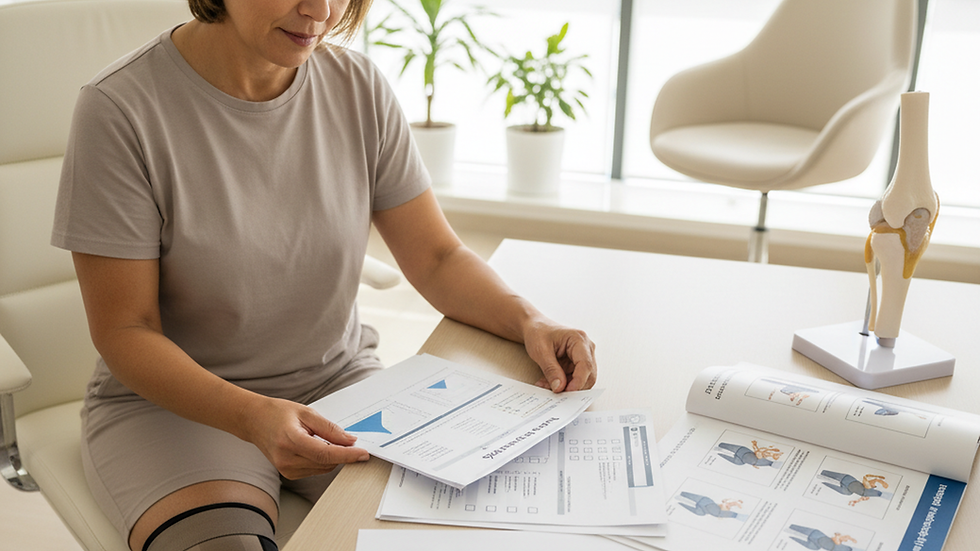
While the general principles of sitting and standing from a chair are fundamental to any recovery after joint replacement surgery , knee replacement presents specific considerations that must be carefully observed. The knee joint, being a complex hinge, requires particular attention to alignment and flexion to ensure proper healing and avoid unnecessary stress on the prosthesis. Understanding and applying these precautions will help you protect your new knee and progress in your rehabilitation process.
Seat selection and positioning
For those who have undergone knee replacement, seating choice is crucial. Soft chairs, rocking chairs, stools, sofas, and excessively low chairs should be strictly avoided . These types of seats can hinder controlled movement, increase the effort required to stand up, and compromise knee alignment. Opt for firm chairs with stable armrests and a height that allows you to keep your feet flat on the floor and your knees at a comfortable angle.
When sitting down, it's essential to slide all the way to the edge of the chair before lowering your body. Once seated, pay special attention to the position of your legs:
Keep your feet and knees pointing straight ahead .
Avoid turning your knees inwards or outwards.
Do not cross your legs or ankles, as this can put undue pressure on the joint.
Managing seated time and mobility
Prolonged immobility can contribute to stiffness and swelling, which is counterproductive to recovery after knee surgery . Therefore, it is recommended to avoid sitting in the same position for more than 30 to 60 minutes at a time . Getting up and moving around briefly, even just a few steps, can improve circulation and help maintain joint flexibility.
In addition, the position of your knee while seated should follow your therapist's instructions. Your knees should be straightened or flexed according to the specific instructions you receive, as this is vital for the rehabilitation program and to prevent the formation of scar tissue that limits movement.
Additional restrictions
An important precaution after knee replacement is driving. You should not drive until your surgeon explicitly clears you to do so. This clearance may take up to four weeks after surgery , depending on your individual progress and the side of the operated knee (whether it's the accelerator/brake leg). The ability to react quickly and operate the pedals safely is essential for your safety and the safety of others.
Specific Considerations for Hip Replacement
Recovery after hip replacement surgery involves a specific set of precautions designed to protect the new joint and prevent dislocation, a serious complication. Unlike the knee, the hip is a ball-and-socket joint, which gives it a wide range of motion but also makes it vulnerable to certain extreme movements after surgery. Understanding and adhering to these guidelines is critical to ensuring successful healing and long-lasting function of your prosthesis.
Key movement restrictions for the hip
The most important precaution after a hip replacement is to avoid excessive flexion. This means you should avoid bending your hip beyond 90 degrees (a right angle). Exceeding this angle can put undue stress on the joint and increase the risk of dislocation. When sitting, this means not leaning too far forward, especially when trying to pick up objects from the floor or tying your shoelaces. Reaching tools are recommended for these tasks.
Other crucial restrictions include:
Do not cross your legs or ankles: This movement can force the hip joint into positions that increase the risk of dislocation. Always keep your legs apart.
Keep your feet about 15 centimeters apart: This separation helps keep the hip in a stable and secure position, reducing stress on the prosthesis.
Align feet and knees: It is vital to keep your feet and knees pointing straight ahead, without turning them inward or outward. Internal or external rotation of the operated leg, especially when the hip is flexed, are high-risk movements.
When sitting down, make sure the chair is high enough so that your knees are not higher than your hips. If necessary, use a firm cushion to raise the seat. When standing up, push yourself up using your arms and the non-operated leg, keeping your back straight and avoiding leaning too far forward.
After a hip replacement, it is crucial to avoid bending the hip beyond 90 degrees, not to cross the legs, and to keep the feet aligned straight ahead. These precautions are vital to prevent dislocation of the prosthesis and ensure a safe and effective recovery.
In addition to these specific movement precautions, it's important not to remain seated in the same position for more than 30 to 60 minutes at a time. Getting up and moving around briefly helps maintain circulation, reduces stiffness, and contributes to a better recovery after surgery . Pain management also plays a vital role in your ability to move safely and comfortably. For more information on this, you can refer to our article on modern pain management protocols for a more comfortable joint replacement recovery .
Recovery after joint replacement surgery is a journey that requires commitment and attention to detail, especially in everyday movements like sitting down and standing up from a chair. By applying safe techniques and taking precautions specific to your knee or hip, you not only protect your new joint but also accelerate your rehabilitation and promote greater independence. Remember that patience, consistency, and open communication with your medical team are essential to overcoming challenges and achieving the best possible results. Every small step taken correctly contributes significantly to your long-term well-being.
Frequently Asked Questions
How long should I follow these precautions?
The timeframe varies depending on your individual recovery and the recommendations of your surgeon or physical therapist. Generally, it is recommended to follow these guidelines for several weeks or until your doctor gives you the go-ahead.
What should I do if I feel pain when sitting or standing up?
If you experience pain, stop the activity, rest, and consult your medical team. Never force a movement that causes pain.
Do I need special equipment at home to sit down and stand up?
A raised toilet seat and a firm cushion to raise the height of the chairs can be very helpful in maintaining bending precautions and facilitating movement.
Important medical notice
The information provided in this article is for educational purposes and should not be considered a substitute for professional medical advice. Recommendations regarding recovery after joint replacement surgery are general and may not be suitable for everyone. Each patient is unique, and medication adjustments, surgical decisions, and rehabilitation guidelines should always be individualized and discussed with your surgeon or physical therapist. Always consult a qualified healthcare professional with any questions or concerns related to your medical condition or treatment.


